
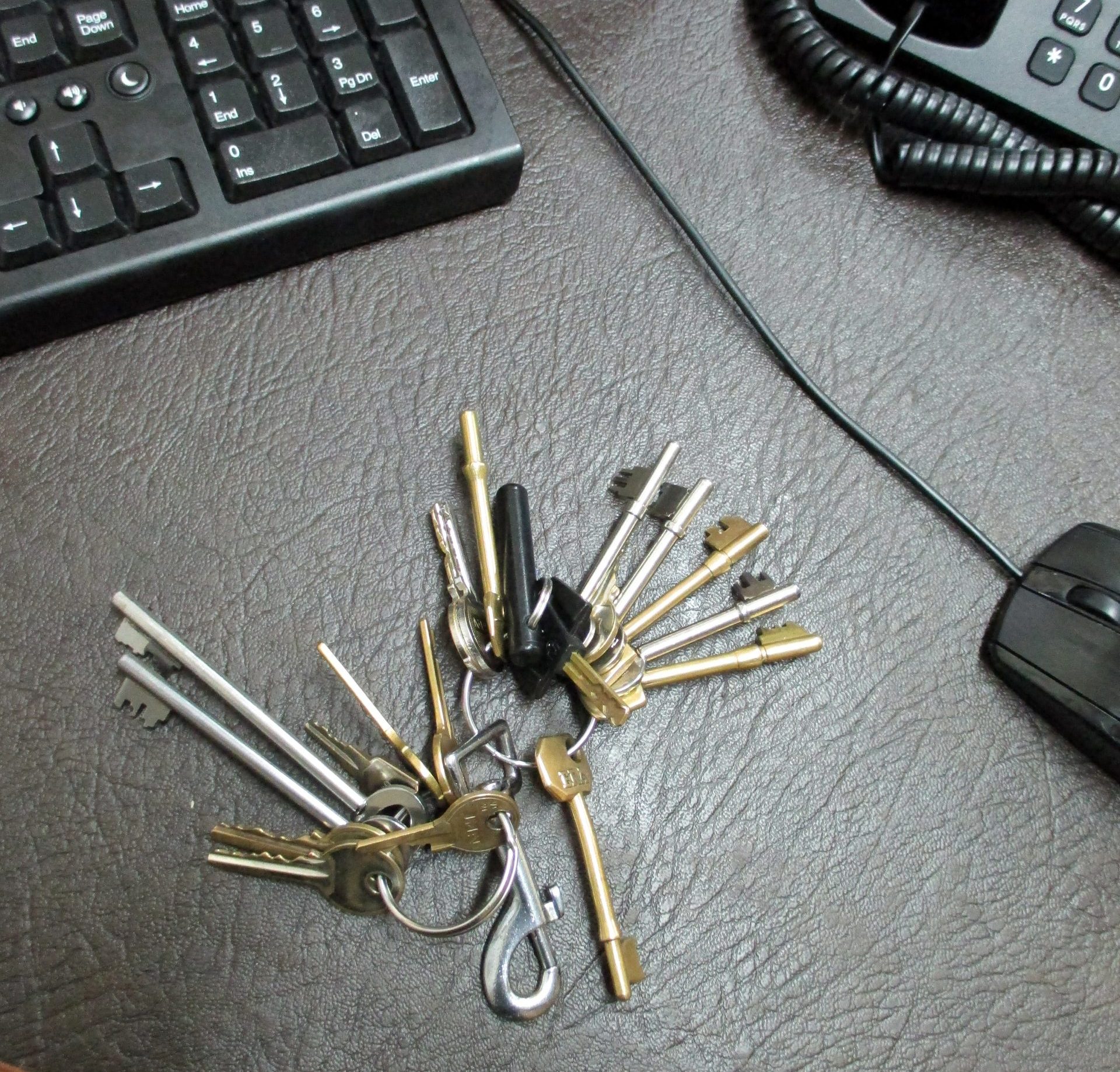
Many office lockouts are preventable with clear key control. A team member arrives early, a set of keys goes missing, an ex-employee never returns their copy, and suddenly the working day stalls before it begins. Staff wait outside. Meetings slip. Client commitments are at risk. And somewhere in the background, there is a security exposure that nobody has formally addressed.
The good news is that most office lockouts are not random bad luck. They are the predictable outcome of poor key management. And poor key management is entirely fixable.
In this guide, we walk through what key control actually means in practice, how restricted key systems and Master Key Systems compare, and the policies that property managers and office leads can put in place today to dramatically reduce the likelihood of a commercial lockout. We also explain when rekeying is the right call, and when it is not.
If you are locked out right now and need an office lockout locksmith in Melbourne, call us directly on 0418 444 166. We operate 24 hours a day, 7 days a week.
The Real Cost of an Office Lockout
The immediate frustration of an office lockout is obvious: your team cannot get in. But the full cost reaches further than most businesses account for.
Lost productive hours are the most visible expense. If ten staff members are waiting outside for 45 minutes while an emergency locksmith is dispatched, that is 7.5 hours of combined labour lost, before a single task is completed.
Security exposure is the less visible risk. When keys go missing before a lockout occurs, there is often a window of uncertainty: who has the key, where has it been, and who might have copied it? If that question goes unanswered, the lock should be rekeyed regardless of whether a lockout actually occurred. Every day a potentially compromised key remains active is a day your premises are less secure than they should be.
Staff frustration and operational disruption compound quickly. A lockout at the start of the day affects morale, client-facing commitments, and the perception of how professionally the business is managed. For property managers overseeing tenanted office buildings, a lockout in one suite can create flow-on issues across the entire building.
Reputational and compliance risk applies specifically to businesses operating in regulated environments, medical practices, law firms, financial services, where access to premises and records is subject to formal obligations. An unplanned lockout in these settings can create operational disruption and may require internal documentation.
The underlying cause of nearly all these costs is the same: a lack of systematic key control.
What Key Control Actually Means
Key control is the process of managing who holds keys, how many copies exist, and what happens to those keys when circumstances change, staff turnover, tenancy changes, renovations, or a simple misplacement.
It sounds straightforward, but in practice most businesses default to an informal approach: keys are cut as needed, handed out without formal records, and rarely tracked or recovered. Over time, the number of keys in circulation grows well beyond what anyone can account for. When a key goes missing, there is no baseline to measure against.
Effective key control involves three core elements:
- A key register: a documented record of every key issued, who holds it, and when it was issued or returned. This does not need to be complex; a spreadsheet or simple form works for smaller offices. For multi-tenancy buildings, a more formal log is essential.
- A restricted key system: keys that cannot be duplicated without authorisation from the lock owner. Standard keys can be copied at any hardware store or newsagent. Restricted keys require the original authorisation documentation and can only be cut by the registered locksmith supplier. This closes the most common gap in informal key management.
- A defined policy for key recovery and lock response: a clear process for what happens when a key is lost, when an employee leaves, or when a tenancy ends. Does the key get returned? Is the lock rekeyed? Who makes that call and how quickly?
With these three elements in place, your business has the structure to prevent most lockouts and to respond decisively when key security is compromised.
Restricted Key Systems vs Master Key Systems
These two solutions are often conflated, but they serve different purposes and are sometimes used together.
Restricted Key Systems
A restricted key system uses patented or proprietary key blanks that are registered to a single authorised supplier. When you establish a restricted system, you receive a card of authority, a document that must be presented before any additional keys can be cut. Without it, the key cannot be duplicated.
This is a cost-effective way to bring control to a single-premise key environment. It does not change who can access what; it simply ensures that access cannot be expanded without your knowledge and approval.
Restricted systems are well-suited to small and medium offices, single-tenancy premises, and any environment where the existing lock hardware is sound but key duplication is the primary concern.
Master Key Systems
A Master Key System takes a layered approach to access. Rather than a single set of identical keys, the system uses a tiered hierarchy: a master key that opens every lock in the system, sub-master keys that open defined groups of locks, and individual keys that open only a specific door.
For a commercial building, this might look like:
- A building manager holding a master key that opens every common area, suite entrance, and service room
- A floor supervisor holding a sub-master key for all suites on their level
- Individual tenants holding keys for their own suite only
This structure eliminates the need to carry a large bundle of keys and removes the temptation to cut informal copies “just in case.” Access is controlled by the key hierarchy itself, and the system is formally documented by the locksmith who designed and installed it.
Master Key Systems also work within restricted key parameters, so duplication control is built into the system from the start.
For property managers overseeing multi-tenancy office buildings, a Master Key System is often the most practical long-term investment. For businesses in a single tenancy, a restricted key system combined with a key register is frequently sufficient.
Our commercial locksmith team can assess your premises and recommend the right approach for your specific layout and access requirements. Speak with our commercial locksmith team by calling 0418 444 166.
6 Practical Key-Control Policies for Property Managers and Office Leads
These are not theoretical recommendations, they are the practical steps that prevent lockouts and reduce key-related security incidents in Melbourne offices and commercial buildings.
- Issue keys against a signed register from day one. Every key issued should be recorded with the recipient’s name, the date, and which door or area it accesses. The register should be reviewed any time staffing changes. This single step creates accountability that informal systems lack entirely.
- Set a formal key-return policy for departing staff. This should be part of your standard offboarding checklist. If a key is not returned on the last day, follow up immediately. If it cannot be confirmed as returned, rekey the affected lock, do not wait to see if the key turns up.
- Rekey on a defined cycle for high-turnover environments. If your office regularly moves through staff, contractors, or short-term tenants, periodic rekeying on a predictable schedule (annually, or at each tenancy change) is more reliable than trying to track every individual key event. We offer office lock rekeying across Melbourne as part of our commercial locksmith services.
- Transition standard keys to restricted key blanks. If your current keys can be duplicated at a hardware store, your key control efforts will always have a gap. Upgrading to a restricted key system closes that gap and is typically straightforward to implement with existing lock hardware, depending on the locks installed.
- Establish a single point of authority for key decisions. In many offices, anyone can decide to cut an extra key “for convenience.” Designate one person, an office manager, facilities contact, or building manager, as the key authority. All new keys must go through them. This prevents informal duplication creeping back in.
- Plan for lockouts before they happen. Know who to call and how to reach them. Keep the number of a trusted commercial locksmith in Melbourne on file, not buried in a folder nobody can access when they are locked outside. We are available 24/7. Save 0418 444 166 now, before you need it.
When Rekeying Makes More Sense Than Lock Replacement
A common question we receive from Melbourne businesses is whether a lockout or key loss event means the locks need to be replaced. In most cases, the answer is no.
Rekeying changes the internal pins and mechanism of an existing lock so that the old key no longer works. A new key is cut to match the new configuration. The lock hardware stays in place; only the cylinder is modified. Rekeying is faster, less disruptive, and significantly more cost-effective than a full lock replacement.
Rekeying is the right call when:
- A key has been lost or its whereabouts are uncertain
- An employee has left and the key was not returned
- A tenancy has ended
- You are taking possession of a premises and cannot verify how many copies of the existing key exist
- You want to consolidate multiple locks to a single key (rekeying to a common configuration)
Lock replacement is the right call when:
- The lock mechanism is worn, damaged, or no longer functioning reliably
- You are upgrading to a higher-security grade lock
- The lock is incompatible with a new Master Key System design
- Forced entry or tampering has damaged the lock beyond rekeying
Our licensed and insured locksmiths carry the equipment to rekey or replace commercial locks on-site, with no unnecessary delays. We service office premises, retail tenancies, warehouse facilities, and multi-tenancy buildings across Melbourne. If you are unsure which option applies to your situation, we are happy to assess the lock and give you a clear recommendation.
Working With a Commercial Locksmith in Melbourne for Ongoing Key Control
Key control is not a one-off installation, it is an ongoing practice. The businesses that avoid repeat lockouts and key-related security incidents are the ones that treat their locksmith as a regular service provider rather than an emergency contact.
There are several ways we support Melbourne businesses with proactive key management:
Key system design and installation. Whether you need a restricted key system for a single-tenancy office or a full Master Key System for a multi-level building, we design and install systems that match your access requirements and your team’s practical needs.
Lock rekeying and key cutting. We rekey individual locks or whole premises as needed, issue new keys against your register, and can advise on consolidating mismatched locks to a single-key configuration.
Premises security assessments. We offer free premises security assessments for commercial properties, a walk-through of your premises that identifies access vulnerabilities, lock grades that may need upgrading, and any gaps in your current key management approach.
24/7 emergency response. Even with the best key control policies in place, lockouts can still occur. When they do, our mobile locksmith dispatch means we can reach your Melbourne premises fast, day, night, weekend, or public holiday.
We work with property managers, facilities teams, building owners, and business operators across Melbourne. Our team is familiar with the practical realities of commercial key management, the competing demands, the staff turnover, the tenancy transitions, and we give you advice that is straightforward and actionable.
Rapid response across Melbourne is something we take seriously. When your business operations depend on access to your premises, you need a locksmith who understands the commercial context, not just the lock mechanism.
Locked Out Right Now? Here Is What to Do
If you are dealing with an office lockout in Melbourne right now, here is the fastest path to resolution:
- Call 0418 444 166 immediately. Our team is available 24 hours a day, 7 days a week, including weekends and public holidays. We dispatch a mobile locksmith to your location promptly.
- Stay with the premises. Do not leave the entrance unattended. Note the time the lockout began, this is useful if there are operational or compliance implications to document.
- Have the address ready. Our team will confirm your location and provide an estimated arrival time when you call.
- Tell us what you know about the lock. If you know the lock brand or whether the building has a Master Key System, mention it when you call. It helps us arrive prepared.
Once we are on site, our licensed and insured locksmiths will gain entry using non-destructive techniques where possible, assess whether the lock needs to be rekeyed following the lockout event, and advise on any steps to prevent recurrence.
After the immediate lockout is resolved, we can discuss key control options, whether that is a restricted key system, a rekeying programme, or a broader Master Key System for your building. Getting back in is the first step. Making sure it does not happen again is what good key management delivers.
Speak With Our Commercial Locksmith Team
Office lockouts are preventable. With the right key control policies, a restricted key system or Master Key System appropriate to your premises, and a rekeying plan tied to staff and tenancy changes, most Melbourne businesses can reduce the risk of repeat lockout incidents.
We are Nonstop Locksmiths, licensed and insured locksmiths serving Melbourne 24 hours a day, 7 days a week. We work with businesses of all sizes, from single-tenancy offices to multi-level commercial buildings, and we bring a practical, commercially-focused approach to every job.
To discuss key control for your premises, arrange a security assessment, or get help with a lockout right now, call us on 0418 444 166 or contact us online.